Brazil nuts
Contribute to saving the Amazon, since they depend on thriving rainforests and cannot be farmed
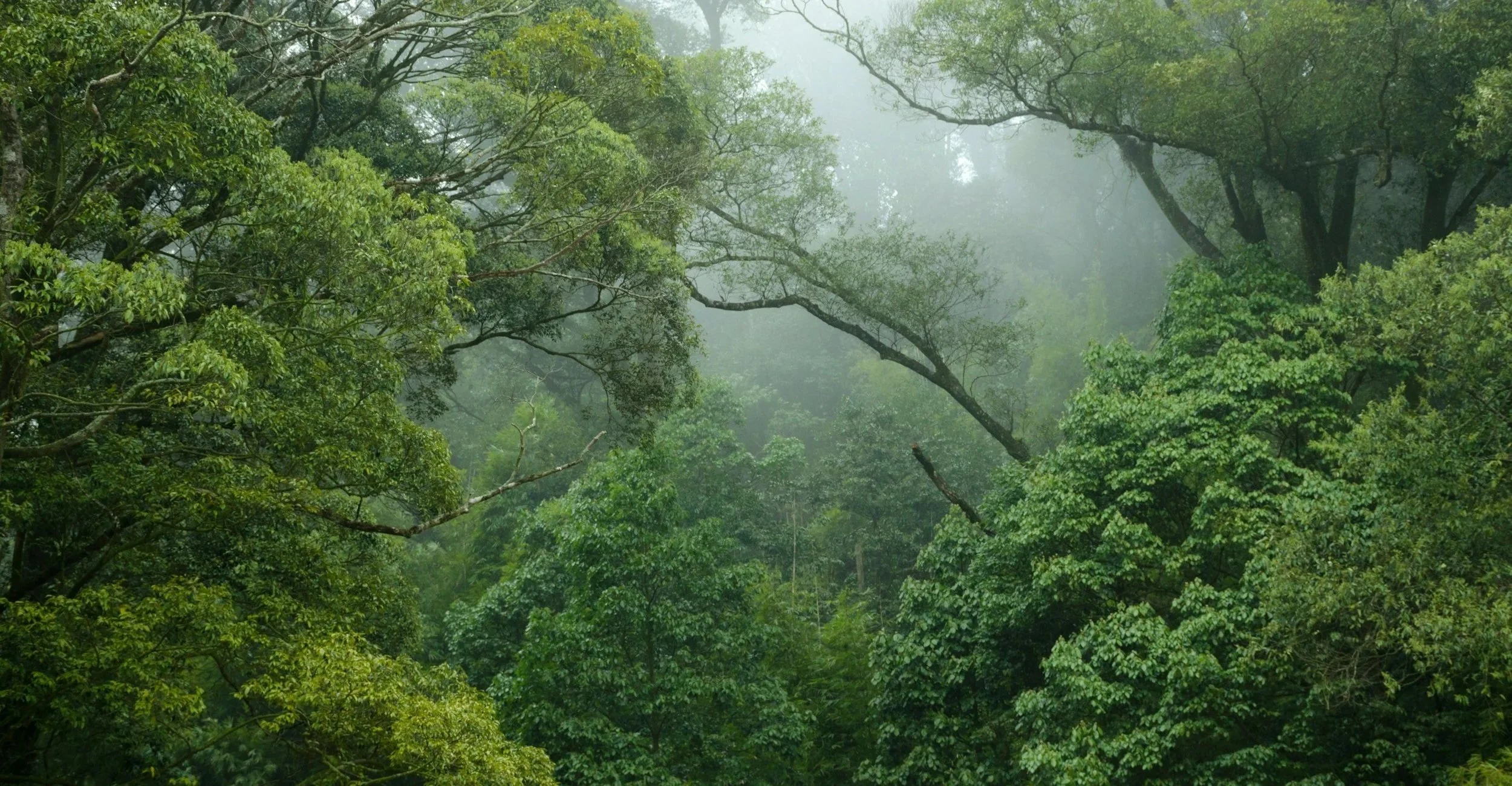
Brazil nuts are wild-harvested in the Amazon rainforest of Bolivia, Brasil and Peru, and the sector engage hundreds of thousands of people. Despite highly fluctuating prices, brazil nuts are an increasingly popular product, with North America and Europe as prioritised markets. Some retailers do however witness about dropping sales, due to high prices.
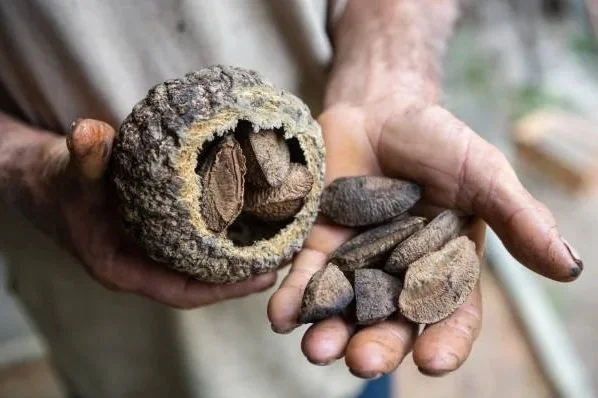
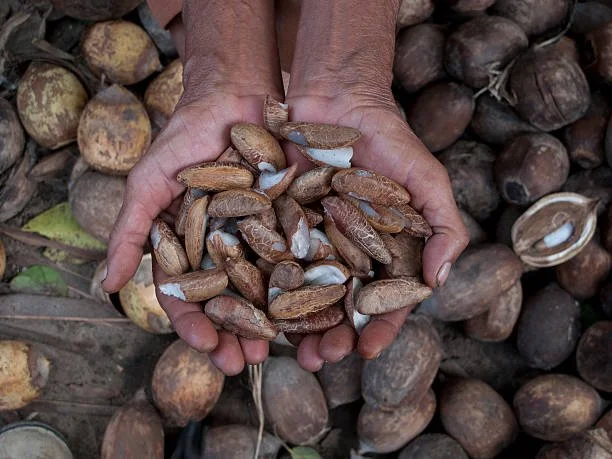
Brazil nuts grow in hard-shelled pods, which contain up to thirty seeds.
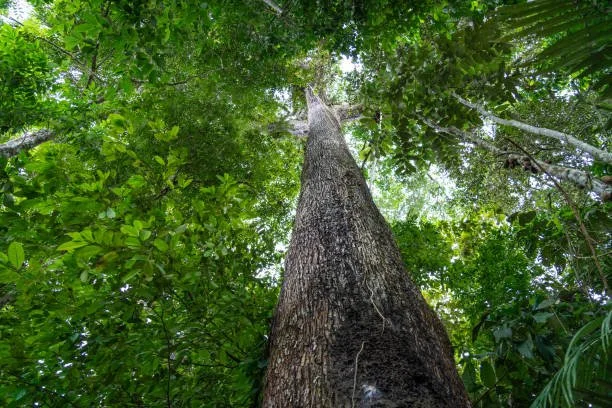
Brazil nuts are one of the most profitable, but yet sustainable Amazonian forest products, strengthening both the economic development and forest conservation in poor, remote areas of the Amazon. The brazil nut trees are a protected species, and the harvest of brazil nuts incentivize forest preservation, since it offers an alternative to illegal timber logging activities. The brazil nuts cannot be farmed, due to their dependence on specific large-bodied bees for pollination that only exist in thriving rainforests. Instead they have to be wild-harvested and collected in the very heart of the rainforest. The highly appreciated brazil nut trees, in turn, contribute to protect the overall biodiversity of the Amazon. They are considered to be a keystone species. Among others, there are both orchids and frogs dependent on the grandiose brazil nut tree.
Local communities collect brazil nuts between december and march, when the ripen fruits, or the so-called nuts, fall down to the ground. Climatic variability do, however, lead to irregular yields. For example, in 2024/2025, the harvest of brazil nuts was realtivly poor, due to El Niño-induced draught and forest fires. In addition, the Amazon is getting drier, due to climate change. Illegal timber logging and deforestation for agriculture also contribute to decreased yields. Promoting the growth of young brazil nut trees is sometimes argued to be one way forward. Younger trees are more resistant to climate change, including draught.
The brazil nut trade is a multi-million dollar industry, yet only a small fraction of the profit benefit the local, indigenous communities
Despite being a physically demanding and dangerous work, the local families who harvest brazil nuts are paid very little. In addition, the price they receive for their harvests varies significantly for each year, depending on both the actual nut supply in the Amazon, which in turn is related to climatic variability, and volatile currency exchange rates. Some argue that if the price was higher, more brazil nuts would be collected, regardless of external factors, such as droughts. According to a study by Federal University of Amazonas in Manaus, Brazil from 2026, local families already prioritise other employment prior to nut harvesting, but many would return to brazil nut harvesting, if the price for collected nuts increased.
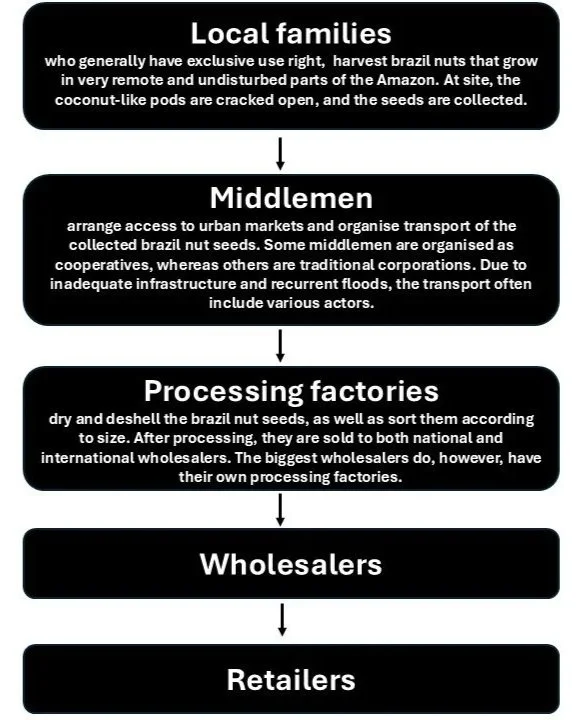
Due to logistical and health-related export restrictions local communities are, unfortunately, discouraged to organise high-volume sales on their own. Instead they are, currently, dependent on middlemen and processing factories, i.e. forced to accept the price they are paid. Many families are also in debt to middlemen and they, therefore, have to continue harvesting brazil nuts to pay off their loans. Middlemen organise the transport on rough dirt roads, which often becomes impassable during the rainy season. Whereas, the processing factories assure compliance with health-related export restrictions, such as testing for aflatoxin contamination, as well as access to the international market. Note, however, that the processing factories do generally not depend on advanced technology, instead they are often characterised by very labour-intensive processes.
Organisation of local actors do, however, aim to strengthen their leverage and change the current power dynamics
Local communities and middlemen have joined together in labour organisations to demand fair prices and protect their interests. At present, there are negotiations between the different actors each season, aiming to agree upon a price for collected brazil nut seeds. The idea is that all processing factories should comply with the this price, but unfortunately that is not always the case. The negotiations are especially complex, due to the fluctuating price, and there are often disputes. For example, during 2025, some Bolivian middlemen sold their harvests in Peru, due to much higher prices.
Another common issue are discussions between middlemen and local communities. The local harvesting families and middlemen should, according to agreement, split the revenue 50/50. The local households do, however, often receive less, since they have limited influence on decision making processes and price settings. Instead, as written above, many families are literally forced to sell under the terms set by individual middlemen, due to lack of options.